The Workforce Behind the Widget: How Supplier Employee Stability Predicts Your Next Supply Chain Crisis
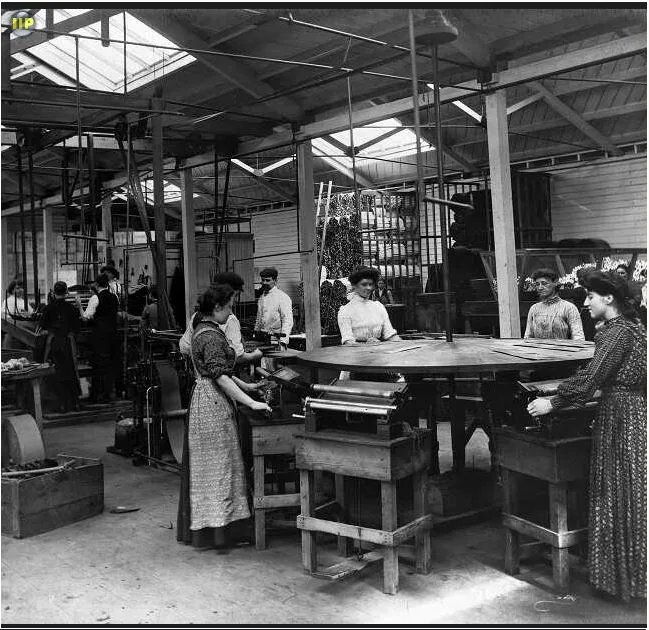
Photo: Randolph.hollingsworth, CC BY-SA 4.0, via Wikimedia Commons
When a US procurement director schedules a supplier audit, the checklist typically covers ISO certifications, equipment calibration records, environmental compliance, and financial statements. These are legitimate and necessary checkpoints. But there is a category of risk that almost never appears on a standard audit form—one that frequently determines whether a supplier delivers on time, maintains quality standards, and honors contractual commitments over the long term.
That category is the human one.
The workforce operating inside your global manufacturing partners carries institutional knowledge, process discipline, and quality judgment that no certification document can fully capture. When that workforce is unstable, demoralized, or quietly cycling out the door, the downstream consequences land directly on your production schedule, your product quality, and your bottom line.
What Turnover Actually Costs Your Supply Chain
Labor turnover at an overseas supplier is rarely reported as a procurement risk. It tends to surface instead as a quality complaint, a missed shipment, or an unexplained spike in defect rates—problems that appear to originate in equipment or process but are actually rooted in people.
Consider what happens when a supplier's skilled floor technicians leave at high rates. Incoming replacements require training periods that stretch weeks or months. During that window, institutional knowledge—the kind that governs how a machine is calibrated, how a tolerance is maintained, how an anomaly is caught before it becomes a defect—is compressed, approximated, or lost entirely. The result is not a dramatic failure. It is a gradual erosion that compounds quietly until it becomes your problem.
For US manufacturers operating on lean inventory models or just-in-time delivery schedules, that erosion has an outsized impact. There is no buffer to absorb it. A supplier workforce in transition is a supplier operating below its certified capacity, regardless of what the audit report says.
The Morale Signal Most Auditors Don't Collect
Employee satisfaction scores, internal grievance rates, absenteeism data, and voluntary turnover figures are not standard components of most supplier qualification processes. They should be.
These metrics function as leading indicators. They tell you where a supplier is heading before the production data reflects it. A facility with declining morale and rising turnover is a facility that will struggle with consistency in the next quarter—not necessarily this one. By the time quality metrics deteriorate visibly, the workforce problem has already been compounding for months.
Some of the most reliable signals to monitor include:
- Voluntary turnover rates among skilled and mid-level production staff, particularly in roles that carry significant process knowledge
- Absenteeism trends, which often rise before turnover spikes and indicate disengagement before departure
- Supervisor-to-worker ratios, which can reveal whether a facility is managing headcount reductions by thinning its oversight layer
- Wage competitiveness relative to regional labor market benchmarks, which predicts whether the supplier can retain experienced workers over time
- Internal promotion rates, which signal whether employees see a future at the organization or treat it as a transitional employer
Collecting this information requires a more direct relationship with supplier management than most US procurement teams currently maintain. It also requires the willingness to ask questions that feel uncomfortable—and to treat the answers as commercially significant data rather than HR trivia.
Why Workplace Culture Predicts Contract Reliability
There is a deeper connection between how a supplier treats its workforce and how reliably that supplier performs against contractual commitments. Organizations that invest in employee wellbeing, maintain transparent internal communication, and resolve grievances through structured processes tend to operate with greater consistency. They retain institutional knowledge. They catch problems earlier. They communicate proactively when challenges arise.
Conversely, suppliers with authoritarian management cultures, suppressed worker feedback, or chronic labor disputes tend to produce environments where problems are hidden rather than surfaced. Quality issues get concealed. Delivery risks go unreported. By the time the US buyer receives a notification, the situation is already critical.
This is not a speculative observation. It reflects a well-documented pattern in operations management: psychological safety within a production workforce directly correlates with defect detection rates and process adherence. Workers who feel secure enough to raise concerns catch more problems before they ship. Workers who fear reprisal for reporting errors let those errors pass.
For US companies that depend on overseas suppliers to uphold quality standards independently—without constant on-site oversight—the internal culture of that supplier's workforce is not a soft metric. It is a hard operational variable.
Building a Workforce Stability Assessment Into Your Vetting Process
Adding workforce stability to your supplier qualification framework does not require a complete overhaul of your procurement process. It requires expanding the lens through which you evaluate partners—and asking for data that most suppliers can provide if they are operating transparently.
A practical starting framework includes the following components:
Direct inquiry during qualification: Request annual turnover rates by department, average employee tenure for production roles, and compensation benchmarking data. Suppliers unwilling to share this information during qualification are communicating something important about their operational transparency.
Third-party labor assessments: Several international consulting firms specialize in workforce environment evaluations that go beyond standard social compliance audits. These assessments examine management practices, internal communication structures, and worker sentiment in ways that standard audits do not.
On-site observation protocols: During facility visits, procurement teams should observe floor-level interactions between supervisors and workers, the physical condition of worker facilities, and whether workers appear engaged or disengaged during routine operations. These qualitative observations carry real predictive value.
Ongoing monitoring through supplier scorecards: Incorporate workforce stability metrics—turnover, absenteeism, wage trends—into your regular supplier performance reviews alongside delivery accuracy and defect rates. Treat a deteriorating workforce environment as the early warning signal it is.
Relationship investment: US procurement teams that maintain regular, substantive communication with supplier management—not just transactional order management—are far more likely to receive early disclosure of workforce challenges before those challenges affect production.
Raising the Standard for What Due Diligence Means
The pressure on US procurement teams to reduce costs, accelerate timelines, and manage an increasingly complex global supply base is real and relentless. In that environment, it is tempting to treat supplier vetting as a compliance exercise—a box to check before the contract is signed.
But the companies that experience the fewest supply chain disruptions are not the ones with the most aggressive cost structures. They are the ones with the deepest understanding of what their suppliers actually look like on the inside—the people, the culture, the daily operational reality that no certification document captures.
Employee satisfaction and workforce stability are not peripheral concerns. They are central to whether a supplier can deliver what it promises, consistently, over the full duration of a commercial relationship. US procurement leaders who begin measuring these factors with the same rigor they apply to quality certifications will find themselves holding a significantly more accurate picture of their supply chain risk—and a significantly stronger position to act on it before disruption arrives.
The audit that matters most may not be the one your supplier knows you're conducting.